

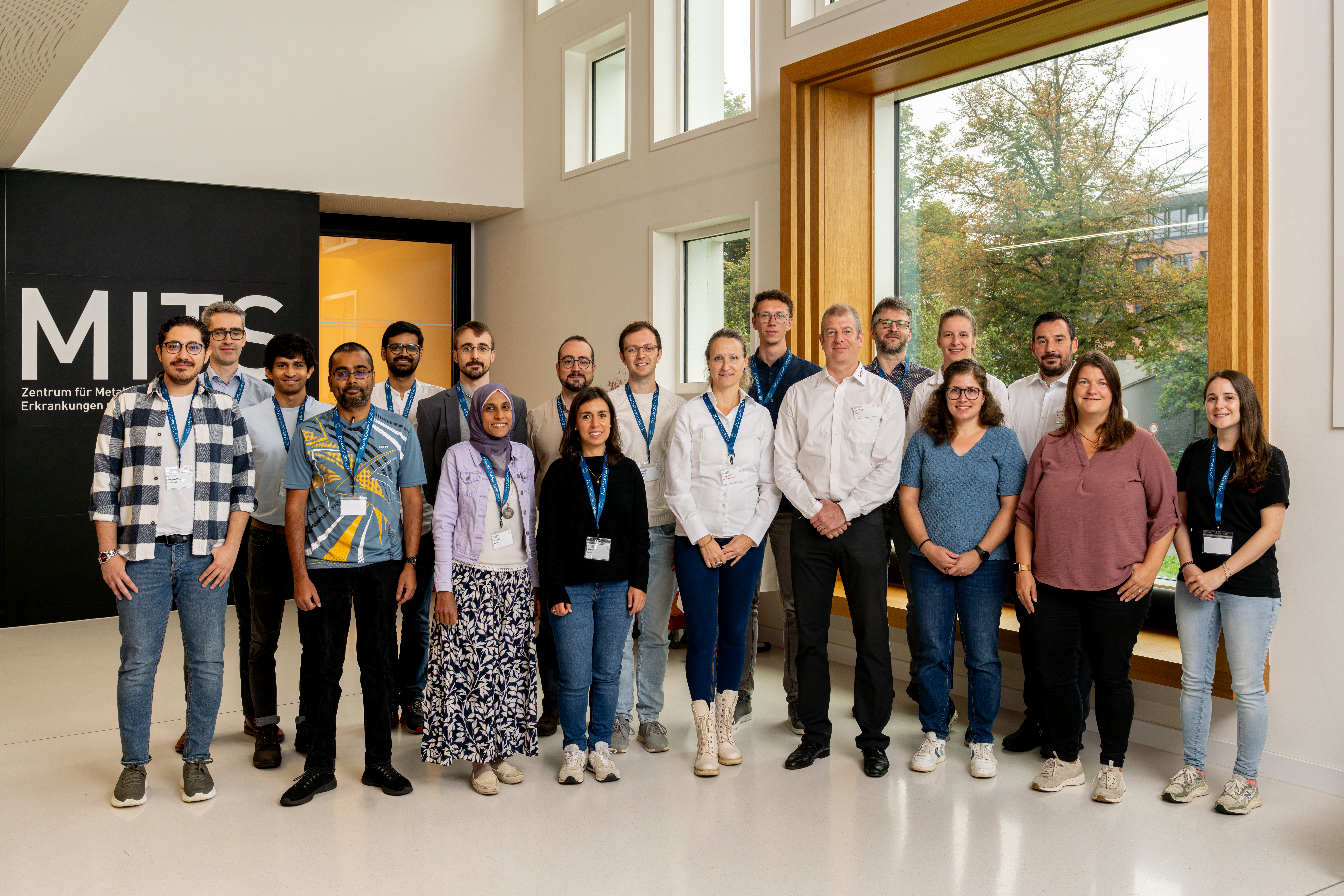
Participants of the 10th International Summer School on Technology Transfer in Live Science hosted by the transCampus Science to Business, 2025.
© Kirsten Johannes Lassig
As part of the Excellence Strategy, the TUD has raised funds in the “EXU University of Excellence” scheme with its application “TUD 2028 – Synergy and beyond“. Within that five target corridors are defined: COLLABORATION is one of them aiming to deepen research relationships. The transCampus S2B is part of the measure “Expansion of international collaborations”. This measure was intended to strengthen collaborations which are state-of-the-art in research and reach out into transfer and entrepreneurial activities. The idea of the transCampus S2B was based on an initiative of TUD creating a win-win situation by making the world connected. The transCampus S2B should became an international programme within the existing transCampus network. The transCampus science to business (S2B) was the promotional instrument of the transCampus providing incentives for entrepreneurial activities.
The International Summer School on Technology Transfer in Live Sciences at the Faculty of Medicine Carl Gustav Carus started within the framework of the Excellence Initiative’s future concept “International Summer Schools” in 2013. Since 2020, the International Summer School on Technology Transfer in Live Sciences is hosted by the transCampus Science to Business. In 2025, the International Summer School on Technology Transfer in Live Sciences is celebrating its 10th anniversary, due to the Corona Pandemic.
Project Information
2025
Human inducible pluripotent stem cell (hiPSCs)-based platform for sex-specific drug screening in neural crest-derived tissues
The central objective of the project is to lay the foundation for a sex-specific drug screening platform that will be established as a start-up in longer term. Isogenic, human inducible pluripotent stem cells (hiPSCs) with XX (female) or XY (male) chromosome sets from the same patient allow for the first time the modulation of sex differences in vitro. Based on these cells, we aim to develop a sex-specific drug screening platform based on hiPSC technology to determine the sex-specific therapeutic index of drugs in a disease-specific model system.
2024
Blood-Brain Nexus: Chip-based diagnostic platform for translating interactive bloodborne factors and neural dynamics into neurotherapeutics
The Blood-Brain Nexus project was conceived to address the critical gap in understanding how systemic factors influence neural network function at a large-scale level. The core ambition of the project was to develop an innovative chip-based diagnostic platform that enables non-invasive, high-resolution monitoring of neuronal activity in response to bloodborne factors. This platform integrates state-of-the-art high-density biosensing technology with AI-driven analytical pipelines, offering a scalable and precise method for decoding the complex interplay between systemic milieu and neural dynamics.
Lowering asymmetric dimethylarginine levels as a possible therapeutic strategy in pulmonary arterial hypertension
The initial goal of the study was to study the therapeutic potential of lowering Asymmetric dimethylarginine (ADMA) levels in pulmonary artery hypertension in a pig model using our recently developed unique device for extracorporeal lowering of ADMA levels (patent EP19188652.2), where we immobilized recombinant dimethylarginine dimethylaminohydrolase 1 (DDAH1) enzyme on agarose beads.
Validation of the biocompatibility of a cell transplantation device for the treatment of diabetes
A mechanism for coating the encapsulation devices was developed, and meshes were employed to maintain the Heparin-starPEG hydrogel coating in place. Growth factor concentrations were identified, and transplantation conditions were established, with particular attention given to optimizing sterilization before transplantation. Encapsulation devices were transplanted into rats, and after one and four weeks, they were explanted for biocompatibility evaluation. Encapsulation and transplantation of insulin-producing hiPSC-derived islets into diabetic rats are performed, with regular blood glucose measurements and intra-peritoneal glucose tolerance tests scheduled at one, two-, and three-months post-transplantation.
2023
Cell transplantation as a novel therapy for endocrine disorders
Use of steroid-producing cells encapsulated in immune-isolating biomaterials to treat Adrenal insufficiency, a life-threatening condition marked by the inability to produce adrenal steroids. Using two cell sources; pig-derived adrenal cells via xenotransplantation and human induced steroid-producing cells (hiSCs) from pluripotent stem cells were analysed.
Both cell types can secrete adrenal hormones in response to stimulation, and their encapsulation has been tested to assess efficacy and safety. This innovative approach offers potential advancements in Adrenal insufficiency treatment by addressing the current limitations of hormone replacement therapies.
Development of a multi-organ-on-a-chip microfluidic system for ischemia/reperfusion injury
The multi-organ-on-a-chip microfluidic system developed in the project mimics and simplifies the complex micromilieu of acute myocardial infarction in patients by incorporating different cardiac cell types: CMs, ECs, cardiac fibroblasts, and Mφ. It can, at least partially, recreate functions of the heart and immune system with tissue barrier properties and multi-organ interactions in vitro.
Neutrophil extracellular traps as possible therapeutic target in post COVID syndrome
The initial goal of the study was to measure Neutrophil extracellular traps (NETs) in patients with post COVID-19 syndrome (PCS), correlate them with the extent of fatigue and test removal of NETs as a novel treatment option for PCS. However, because of the general interest of Santersus, the company producing the specific column for removal of NETS (NucleoCapture), in exploring new potential therapeutic applications of their product, we decided in the first step to investigate, whether there is a rationale for combining the NucleoCapture column with already existing apheresis systems
2022
Development of smart sensors for continuous monitoring of blood gases and key laboratory parameters for extra-corporeal membrane oxygenation (ECMO)
The main objective of this joint project is to generate proof-of-concept evidence demonstrating the capability of miniaturized sensors to measure vital laboratory parameters within the ECMO circuit at the bedside. Our goal is to develop a fully functional prototype and progress the sensor platform towards a medical product in clinical use in collaboration with potential business partners.
Novel blood-based biomarker panels for the diagnosis and staging of Non-Alcoholic Fatty Liver disease
The grant allowed us to test scientific approaches that are critical to initiating a commercial effort. We focused on creating diagnostic panels for staging NAFLD and our results are currently very promising and we are optimistic for potential commercialization.
2021
Tele-Taste: Development of a taste test for clinical practice
Within the context of the project on Teletaste the following studies were performed:
- Dresden: Development of a short version of a taste test including stimuli for astringency and spiciness
- Dresden: Assessment of patients with smell and taste loss plus healthy controls; validation and assessment of test-retest reliability
- Jerusalem: Assessment of healthy controls in a supervised and a non-supervised test situation, at the laboratory or at the homes of participants.
Detailed and extensive contacts with Corowell– this company would like to further develop the product and utilize it for taste screening in patients.
Validation of Hes3 and TPM4 as novel biomarkers in neurology and neuro-oncology
We wanted to develop new tools and test the hypothesis that targeting the Hes3 Signaling Axis is a fundamentally new approach that will lead to new therapies for degenerative disease and cancer. The work was tailored to explore the Intellectual Property landscape (an essential step for commercialization as well as for developing a therapy, both of which require investor support), early preclinical and clinical analyses to test our hypothesis, and the generation of new genetic models that will hugely help our R&D develop beyond the transCelerator project.
2020
Cells in Matrix
This Project plans to develop an Engineered Micro Pancreas (EMP) based on organ-derived 3D cell culture and human sourced insulin producing cells as a novel model and tool for accelerating and cost reduction of diabetes drug research and testing.
Bioactive adhesion prophylaxis in abdominal surgery
EIO Biomedical Ltd. has developed the Extrinsic System Concentrate (ESC) product to minimise adhesions after surgical procedures. Currently, the product has a shelf life of only four weeks. Various storage and freezing methods were tested to ensure a minimum shelf life of three to six months. For each of these conditions, different time points were examined and the product was tested for its effectiveness. Elementary components of the validation processes were investigations into stability, sterility and purity, as well as the activity level of coagulation factors in ESC.